Computational Applied Tomography (CAT) group
Led by Dr Ander Biguri, the CAT group develops the mathematics, algorithms and open-source software that turn tomographic measurements into reliable images, and puts them to work on real data in medicine, materials science and physics. We are part of the Cambridge Image Analysis group led by Prof Carola-Bibiane Schönlieb, at the Department of Applied Mathematics and Theoretical Physics (DAMTP), University of Cambridge.
Research
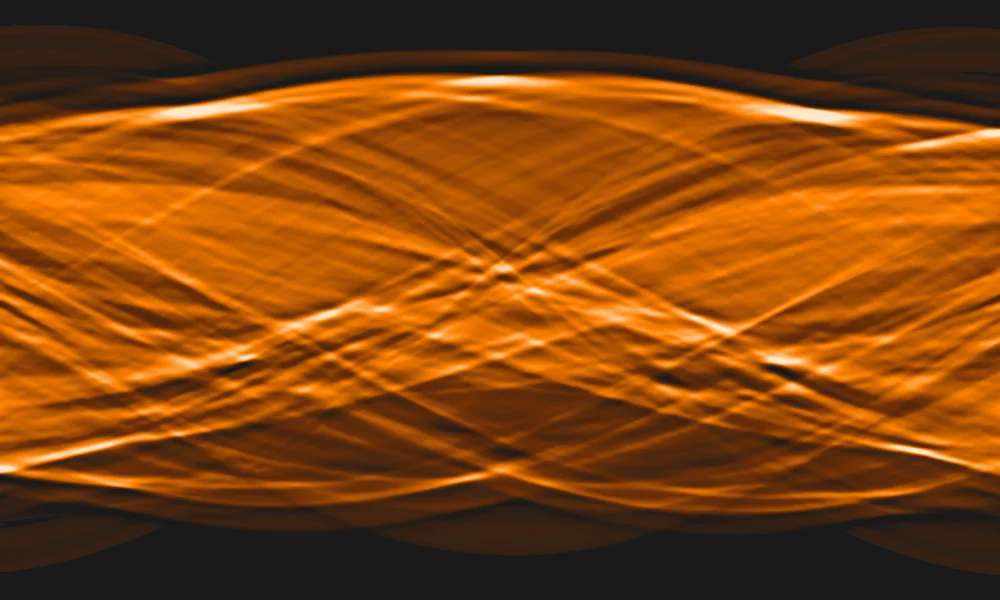
Our work combines applied mathematics (optimisation and machine learning for inverse problems), computation (GPU algorithms and research software) and applications (real datasets and new uses of tomography).
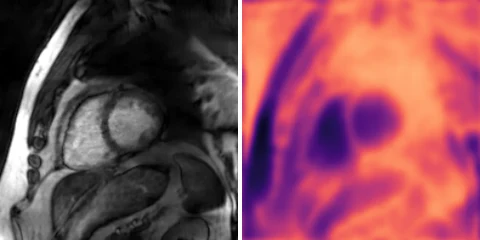
Learned reconstruction you can trust
Machine-learning reconstruction that is benchmarked on real data, works without clean training data and knows how certain it is: self-supervised and task-adapted methods, learned regularisation and generative priors.
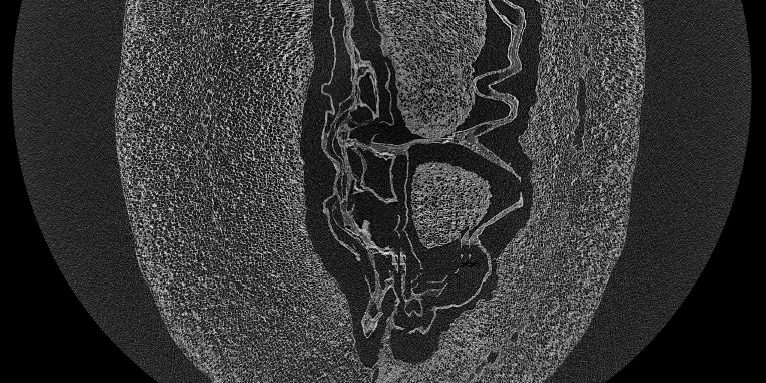
Fast, large-scale and real-time CT
GPU and Krylov-subspace algorithms that make iterative reconstruction practical for datasets larger than GPU memory, and fast enough for repeated scans during an intervention.
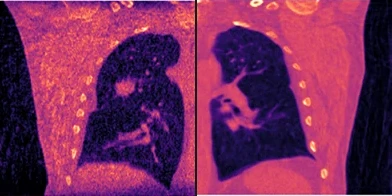
Imaging in the clinic
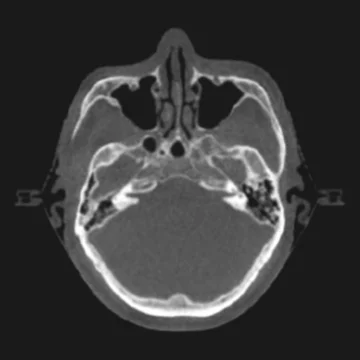
Low-dose and motion-compensated cone-beam CT, scanner trajectories optimised for interventional and dental imaging, and image-quality measures that agree with what clinicians see.
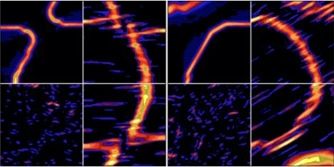
New uses of tomography
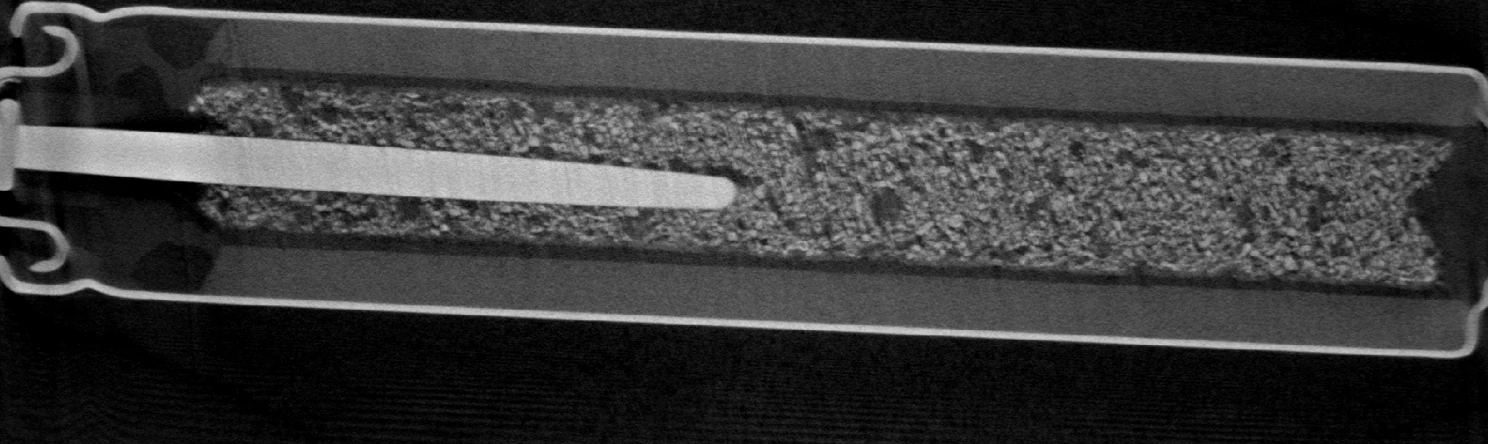
Taking reconstruction beyond medical CT: Fermi surfaces of materials from positron annihilation (ACAR) data, fast photocurrent mapping of solar cells, and X-ray CT for industrial metrology.
Everything we develop is released as open source, mainly through TIGRE for fast iterative reconstruction of real CT data and LION for reproducible learned reconstruction; see the Software page. For more, browse our Publications or the Gallery of research images. Ander also offers consulting on tomographic reconstruction and imaging inverse problems.
Team


Previous members
- Alvaro Exposito Martinez
- Prachi Sarma
- Guonian (Ricky) Qiu
- Charlie Shoebridge
- Fred Vickers Hastings
- Bryn Drury
Previous visitors
- Sepideh Hatamikia Danube Private University, Medical University of Vienna
- Chu Chen City University of Hong Kong
- S M Ragib Shahriar Islam Medical University of Vienna
See also the MSc/MPhil students I have supervised.
News
- Nov 2026 Ander is organising the minisymposium “Recent Advances in Learned Priors in Imaging and Inverse Problems” at ECSML 2027, the European Conference on Scientific Machine Learning (Naples, 8–10 February 2027).
- Nov 2026 TIGRE v3.3.1 is out. See the Software page for what TIGRE can do.
- Nov 2026 Andrea Sainz Bear and Honglei Brinkmann presented at the joint SIAM conferences in Salt Lake City (16–20 November 2026): Andrea spoke on Collaborative Multi-task Learning in Inverse Problems at the SIAM Conference on Imaging Science (IS26), and Honglei on Adaptive Flow-Induced Manifold Learning for Multi-Mode Data at the SIAM Conference on Mathematics of Data Science (MDS26).
- Oct 2026 New preprint by Honglei Brinkmann, who joins the group as a PhD student in January: Geometry-Aware Diffusion Approximate Posterior Sampling for Sparse-View and Limited-Angle CT.
- Oct 2026 Congratulations to Dr S M Ragib Shahriar Islam on completing his PhD at the Medical University of Vienna, co-supervised by Ander.
More news
- Oct 2026 Padmini Krishnadas joins the group as a PhD student, working on uncertainty quantification in the MRI pipeline.
- Sep 2026 New preprint by Troy Vu: DREAM: Deep-Reparametrization of Adaptive Regularization Maps for Fast Zero-Shot Self-Supervised Learning.
- Jul 2026 Two new preprints: Georg Lovric’s DeepCormack, Fermi surface tomography with model-based data-driven algorithms, and CBCT-IQ, a publicly available annotated cone-beam CT dataset for image quality assessment.
- Jun 2026 Four MPhil Data Intensive Science students complete their theses with the group (see Teaching). The Application of Data Science to Medical Imaging course runs again in 2027.
- May 2026 LamiGauss, Gaussian splatting for sparse-view X-ray laminography with visitor Chu Chen, is presented at ICASSP 2026.
- May 2026 Real-time CBCT reconstructions using Krylov solvers in repeated scanning procedures is published in Physics in Medicine & Biology.
- 2025 The Cambridge Image Analysis group, including Ander, is shortlisted for the Into Change Award 2025, which recognises European research groups whose work has a broad impact on society.
Collaborations
Our current collaborations include:
- Smart measurements and photocurrent mapping (A3SmartML project, with Troy Vu) Manuel Marschall, the NPL photocurrent mapping teamPTB, Germany, and the National Physical Laboratory (NPL), UKA3SmartML project
- Interventional and dental CBCT Sepideh Hatamikia, Wolfgang Birkfellner, Gernot KronreifDanube Private University, Medical University of Vienna and ACMIT, AustriaTrajectory optimisation review (2022)
- Krylov methods for large-scale and real-time CBCT Malena Sabaté LandmanUniversity of Warwick, UKReal-time CBCT with Krylov solvers (2026)
- Industrial and large-scale CT, TIGRE Thomas Blumensath, Richard BoardmanUniversity of Southampton and the µ-VIS X-ray Imaging Centre, UKTIGRE v3 (2025)
- Open-source tomography software Edoardo Pasca, Gemma Fardell, Margaret DuffSTFC and the Collaborative Computational Project in Tomographic Imaging (CCPi), UKCCPi and the Core Imaging Library
- Learned reconstruction on real CT data Felix Lucka, Joost BatenburgCentrum Wiskunde & Informatica (CWI) Amsterdam and Leiden University, NetherlandsBenchmarking learned CT algorithms (2025)
- Self-supervised reconstruction Markus Haltmeier, Johannes Schwab, Nadja Gruber, Gyeongha HwangUniversity of Innsbruck and Medical University of Innsbruck, Austria; Yeungnam University, South KoreaNoisier2Inverse (2025)
- Learned adaptive regularisation Andreas Kofler, Christoph Kolbitsch, Luca Calatroni, Kostas PapafitsorosPTB Berlin, Germany; Università di Genova, Italy; Queen Mary University of London, UKDREAM (2026)
- Data-driven model-based algorithms for CT Subhadip MukherjeeIIT Kharagpur, IndiaLow-dose 3D CBCT challenge (2025)
- Fermi surface tomography Stephen DugdaleUniversity of Bristol, UKDeepCormack (2026)
If you have an idea for a collaboration, please drop me an email. The group is currently at full capacity, so I am not taking on new students or visitors at the moment.